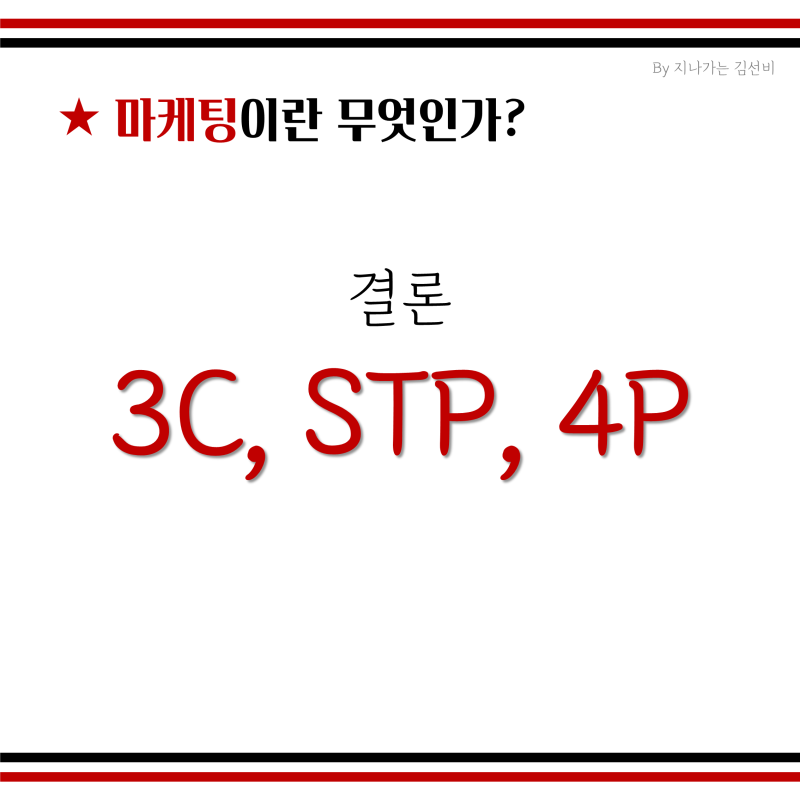
What is marketing? From the basics to key points, explained in an easy-to-understand manner even for beginners! “We often hear the word ‘marketing,’ but what does it mean?” Many people may be thinking. ‘There are probably many people who think this. Marketing, in a word, is ‘creating a structure that can be sold.’ When actually doing marketing, you have to think about ‘to whom,’ ‘what value,’ and ‘how to provide it.’ This time, we will explain the definition and basics of marketing in an easy-to-understand manner. Marketing refers to establishing a structure in which products or services can be sold naturally in corporate activities. This includes all processes, starting from market research and product development to sales, publicity, and promotions.Definition of MarketingMarketing is often confused with ‘sales’. However, management scholar Philip Kotler said, “Marketing and sales are almost diametrically opposed activities.” Another management scholar, Peter Drucker, asserted, “The purpose of marketing is to make sales unnecessary.” According to Kotler, the definition of marketing is as follows: “Exploring what value can be provided to meet the needs of the target market, creating that value, delivering it to customers, and generating profit through this.” Marketing is product It is not about asking ‘how to sell’ the ‘value’ of services or services to customers. It is about fully understanding the needs of customers, creating value that can meet those needs, and creating a state that can be sold naturally without having to sell it. ‘Making’ can be said to be the ideal of marketing. History of Marketing The history of marketing is very old, and is known to have been born in the United States in the late 19th and early 20th centuries. It started with a ‘product-centered’ focus on objects. This is Marketing 1.0 (Mass Marketing). Starting from this, it later developed into ‘customer-oriented’ Marketing 2.0, ‘value-oriented’ Marketing 3.0, and ‘self-actualization’ Marketing 4.0. This theory of marketing evolution was developed by American management scholar Philip Kotler, who is called the ‘father of modern marketing’. Defined by Philip Kotler. Marketing 1.0 (product-oriented) Marketing 2.0 (customer-oriented) Marketing 3.0 (value-oriented) Marketing 4.0 (self-actualization) Marketing 1.0 (product-oriented) Marketing 1.0 is marketing from 1900 to the 1960s. The method is so-called mass marketing. Inexpensive and affordable products are promoted to customers of various generations regardless of age or gender through mass advertising on TV, radio, etc. Marketing 2.0 (customer-oriented) Marketing 2.0 is from the 1970s to the 1980s. It is a marketing technique that became mainstream in the mid-1990s. This was a time when people’s lives began to become richer and leadership shifted from companies to customers. Against this background, customer-oriented product development has become important. Marketing 3.0 (value-oriented) Marketing 3.0 is a marketing technique that became mainstream from the 1990s to the 2000s. During this period, as the Internet began to spread in earnest, online Marketing techniques through It is a catchy marketing technique.Currently, customers are not only interested in simply purchasing a product or service, but they are also placing importance on whether they can achieve self-actualization after purchasing. In other words, after purchasing a product or service, I began to think about whether I could satisfy my own needs. Is it really what I need, not just a fad? By purchasing a product or service from that perspective, I can provide the only one for that person. A marketing method that can be used is required. The difference between sales and marketing is that it builds a ‘structure that can be sold naturally.’ In other words, we do not engage in unilaterally forced sales. In sales, sales talks are prepared and sales are carried out according to the sales manual. However, in these existing sales, the customer’s will is not respected. Only the salesman’s desire to sell dominates the atmosphere, and the customer remains in a state of fear due to the aura emitted by the salesman, wondering if he is being forced to buy. In this situation, customers become intimidated, and what can be sold becomes unsold. However, in marketing, the goal is to create a state in which customers are interested in products or services and can purchase them of their own volition without the company asking for sales or forcing them to do so. This is the big difference between sales and marketing. When actually executing: 1. To whom 2. What value3. Thinking about how to provide it is fundamental. Let’s look at each of them below:1. In order to carry out marketing (segmentation and targeting), you need to decide who you will appeal your service to and the target customers. Each customer has different needs. Once you segment your customers and their needs become clear, you can then clarify your strategy. In order to determine target customers, ‘segmentation’ and ‘targeting’ are performed. Segmentation Segmentation refers to segmenting the market (=customers) to understand the structure of the market. Evaluation axes for segmentation can be considered diverse, such as industry or type of business, sales volume, region, age, hobbies, past behavior data, etc. Segmentation is a very important process in marketing because future strategies vary greatly depending on how segmentation is done. . Once you have been able to segment the targeting market, the next step is ‘targeting’ to decide which of the segmented markets to target. When targeting, you must be able to keenly feel the needs of the market as your ‘own task’. It is important to consider things like being able to utilize your company’s strengths and maintaining a clear advantage compared to competitors.2 . Once you have decided on what value to provide (benefits and differentiation) to your target customers, you must decide what value to provide in response to their needs. What we need to pay attention to here is ‘benefit’ and ‘differentiation’.BenefitBenefit refers to the ‘value’ of a product or service. For example, a customer may purchase a drill not because he or she is interested in the tool, but because he or she wants the value of ‘drilling a hole.’ A customer may purchase a luxury car because he or she ‘wants to show off.’ Whether it is a product or a service, how to appeal the benefits to customers must be considered and decided along with the customer’s needs. Differentiation In most cases, there are competitors in the market. If you offer the same value as your competitors, customers will choose the one with the lower price. Therefore, in order to avoid falling into price competition, you must appeal to customers about how the products or services you provide are different from those of other companies. Of course, price is included as a factor in this ‘differentiation’, but in addition, strengthening functions and services and strengthening contact points with customers Various perspectives can be considered. The point is to differentiate ourselves so that we can make the most of our strengths.3. How to Provide (4P) Once you have specified the customer needs and the value to be provided, you must consider how to actually provide it to the customer. One of the methodologies is ‘4P’. 4P is, Product… Price of products, services, etc. Pricing and Pricing SystemPromotion… Sales method including advertising etc. Placement… It refers to the sales channel. For example, if you sell beverages, the specific details of the 4Ps are as follows, Product… Beverage ingredients or package price… Will there be a discount on the regular price of drinks? Promotion… Placement such as product catalogs, store POPs, salespeople’s sales talks, TV advertisements, etc. You think of convenience stores, mass retailers, internet sales, etc. 4P was proposed in the 1960s, but some parts did not fit the times, so it was changed to ‘4C’ in the 1990s, Customer Value… Customer ValueCost… Cost Convenience … ConvenienceCommunication… Communication with customers was advocated. In any case, these should be a faithful embodiment of the ‘target customers and the value provided’ obtained through the segmentation, targeting, benefits and differentiation described above.Main Types of MarketingThe main types of marketing are as follows. There are similar things.● Mass marketing● Direct marketing● Inbound marketing● SNS marketing● Web marketing Mass marketingMass marketing is marketing that targets an unspecified number of people of all ages and genders without segmenting customers. Mass is written as ‘mass’ in English and has the meaning of ‘the public’, ‘the common people’, and ‘the whole’. The main means of advertising include media such as TV and radio, as well as newspapers and magazines. Although it is expensive, it can reach a wide range of customers, so it is suitable for promoting products or services regardless of age or gender, such as housing-related, automobiles, and daily necessities. Direct marketing Direct marketing, like mass marketing, is unilaterally carried out by a company to customers. Rather than just marketing, we conduct two-way marketing tailored to the needs of customers. When a company communicates with customers, marketing based on customer reactions becomes possible. By developing such customer-focused marketing, we can gain customer trust, which can lead to marketing with high customer satisfaction (CS). Inbound Marketing Inbound marketing is a marketing technique that is established only when customers come to the company. The company does not engage in excessive sales or flashy promotions, and it can be said to be the opposite of mass marketing. The biggest characteristic of inbound marketing is that customers approach the company with interest in the company or its products. In many cases, they have already researched the company or its products, and the willingness to purchase may be very high at the inquiry stage. A marketing technique with a high possibility of suddenly securing these ‘hot leads (customers right now) is inbound. Marketing.Related Article: What is Mass Marketing? We explain the advantages, disadvantages, and use cases! SNS MarketingSNS marketing refers to marketing techniques using SNS such as Facebook, X (formerly Twitter), and Instagram. Since each medium has its pros and cons, a marketing strategy that takes advantage of its characteristics is necessary. Representative media frequently used in SNS marketing are mainly as follows. We explain each feature, target, usage method, etc.・Facebook・X (formerly Twitter)・Instagram・LINEFacebookFacebook is a SNS with the largest number of users in the world, with the main users being relatively older, around 40-50 years old. I’m on the side. Since real name registration is the principle, many users use it for business purposes, so it is also widely used for exchanging business cards. The proportion of businessmen in their 30s and 40s who use it is also high, making it suitable as an SNS to promote BtoB or business-related products or services. It can be said that the number of domestic users of Although it is a text-based SNS, it has a limit of 140 characters, so it is not suitable as a medium for conveying a lot of information. However, the spreading power is very high, and once it spreads, the information is instantly delivered to many users, so the immediacy of information transmission is possible on other SNS. It can be said to be superior. It can be said to be suitable as a SNS that promotes products or services that make people want to look at them. Instagram is a SNS that specializes in visually enjoyable content such as photos and videos. The main user base is mainly people in their 20s to 40s. A business strategy that appeals to the eyes is suitable and is widely used in branding strategies. In addition, compared to other SNS, Instagram users are more active in posting, with 70% of ‘DAU = Daily Active Users’ posting stories, of which 70% of DAU = Daily Active Users post stories. There is also a statistic that 1/3 of posts are business posts. In this way, SNS that appeals with visual information can be said to be suitable for business strategies that create one’s own view of the world, such as fashion and cosmetics. LINELINE is used by people of all ages because the phone function can be used for free. It is an SNS that makes communication very easy as it can form a closed community and can also be used as a daily contact tool. Therefore, if it is an advertisement or promotion from a trustworthy person, there is a very high possibility that it will be viewed, and a business strategy using LINE is It is recommended to first form a closed community with users within the same segment, and then lead nurture through communication. The strategy is to nurture hot leads by then conducting lead nurturing through communication. It can be said to be suitable.Web MarketingWeb marketing is a marketing method that is mainly carried out on the web. Marketing techniques that utilize all digital media are called digital marketing. Web marketing is a method of digital marketing, and web marketing mainly establishes strategies using the following media.・SEO (Search Engine Optimization)・Internet advertising・E-mail・Online seminar・Webinar・SNSSEO ‘SEO = Search Engine Optimization’ is Japanese for ‘search engine optimization’, and we implement measures to expose our website at the top of search engines such as Google and Yahoo. SEO’s goal of attracting customers is, so to speak, to expose the website to the top, and if this is achieved, an increase in the number of visitors can be expected and lead acquisition can be expected. In particular, it is a medium that can be said to be the main web marketing medium because it does not require advertising costs. Internet Advertising Advertisements displayed on media on the web are called Internet advertisements. Internet advertisements are mainly of the following types: Listing advertisements Affiliate advertisements Ad network advertisements Retargeting advertisements Listing advertisements Listing advertisements are advertisements that appear in the advertisement area of the search results screen of search engines such as Google or Yahoo. This is an advertisement used when you want to attract a large number of visitors in a short period of time because it is displayed higher than organic search results. Affiliate Advertisement This is an advertisement that can be placed in partnership with an intermediary called ‘ASP=Affiliate Service Provider’. By forming a partnership with ASP, advertisers and affiliates (media owners) can place advertisements, and affiliates (media owners) can place advertisements on their own media. As influential influencers promote You can expect a lot of connections, and the possibility of leading to ‘CV=conversion’ increases.Ad network advertisingAd network advertising gathers various media such as websites and SNS to build an advertising transmission network, and advertises in batches on the established media. This is the method of transmitting. It is used as a very efficient advertising execution system because there is no hassle of posting advertisements one by one on each medium, and advertisements can be placed on many media at once. However, since it is difficult to segment the target audience, it is suitable for promoting enthusiast-oriented products or services. It is suitable for promoting products or services that many people need, such as daily necessities or daily miscellaneous goods. Retargeting advertisements Retargeting advertisements are based on the user’s interests through the user’s on-site behavior and browsing history on websites the user has visited in the past. This is an advertisement that predicts products or services of interest and automatically displays related advertisements. Retargeting advertising, which targets users or potential customers who are interested but have not made a purchase, is being used as a highly cost-effective advertising method. While many media in web marketing, such as email SEO and internet advertising, are ‘receiving’, email is It becomes a medium of ‘attack’. Email is sometimes described as the salesman of web marketing, and depending on how it is used, it has an excellent customer attraction effect. We collect customer email addresses, create a customer list, and conduct email marketing targeting those customers. Online seminars and webinars After branding and nurturing users through online seminars or webinars, we provide back-end products or services. There is also a marketing method that connects users. Users can feel safe and trust because they can see the face of the person selling the product or service. This is a web marketing technique that has gained attention as face-to-face meetings have become difficult due to the coronavirus. SNS ‘SNS marketing’ described in the above item is a method of web marketing. It is a marketing technique that effectively utilizes various SNS. Basic process of marketing activities All marketing activities are carried out according to the following basic processes: Designing a market research strategy Verifying the effectiveness of advertising and public relations Market research Marketing activities are first conducted through market research (marketing research). It begins. Conduct thorough market research, including what customers want, whether there is demand in the market, and what the market size is. If you neglect this step, you will end up with so-called ‘unsold products’ that customers do not want or that have no market demand, for a long period of time. You will go through trial and error. In order to eliminate these failure factors and risks in advance, you must first conduct thorough market research before starting product development. Strategy Design Through market research, you can collect some market data on the macro and micro environment surrounding your company. At this stage, based on this, we design our future marketing strategy. We establish detailed strategies, such as what products we will develop, at what price, and in what form we will provide those products to customers. Advertisement Once the promotional strategy has been specified to some extent, the next step is ‘advertising and promotion’. A product or service can only be sold if it is recognized by customers. In business, one of the reasons why a product or service does not sell is often due to ‘lack of customer awareness.’ Just as a product made by a good craftsman cannot be sold and is not recognized by customers, no matter how good the product is, it will not sell. Even if you put it out into the world, if you do not promote it, there is a high possibility that it will not be sold due to lack of customer awareness. Since the appropriate advertising medium or promotion method differs depending on the product or service, there is always a need to look for better advertising and promotion methods. Verification of effectiveness After selling a product or service, you need to set a period and regularly verify the effectiveness. If sales were good for a certain period of time, verify ‘why sales were good’, and conversely, if sales were sluggish, verify ‘why sales were sluggish.’ The PDCA cycle is the optimal framework for pursuing and improving results. In verifying effectiveness, running the PDCA cycle and identifying positive and negative factors can lead to additional performance improvement. Representative Marketing Frameworks Introducing several marketing frameworks that are frequently used when establishing marketing strategies. 3C Analysis 4P AnalysisPEST AnalysisSWOT AnalysisSTP AnalysisPPM Analysis3C Analysis3C Analysis is a marketing framework that allows you to find the measures your company should take in the future through the competition and market environment surrounding your company, and the current situation your company is in. “3C analysis is an acronym for three elements: Customer: Market-Customer, Competitor: Competitor, Company: Company. 3C analysis begins with identifying the market in which the company wants to compete and customer trends in that market. . At this stage, the company decides what products and services it will compete with and the direction it should take. Next, it confirms the existence of competitors in the decided market. We check our competitors’ strengths and weaknesses, their position within the industry, and collect information about their products and services. Lastly, based on the information we have collected, we compare ourselves with our competitors, find out what our company can do, and determine what gives us an edge over our competitors. Establish a marketing strategy while reconfirming the work, etc. 4P Analysis4P Analysis is a marketing framework that allows companies to find the optimal strategy when establishing a sales strategy for products or services. “4P analysis is an acronym for the following four items: Product: Product/Service, Price: Price, Promotion: Promotion, and Place: Distribution. The important thing is to establish a consistent marketing strategy for these four items, and among the 4Ps If any one item is biased, it cannot function properly, regardless of whether it is a good or bad factor. A marketing strategy can only be established when the consistency of the four items is secured. PEST AnalysisPEST analysis is a ‘macro-level analysis’ that the company cannot control. It is a marketing framework suitable for analyzing the ‘environment’. “PEST analysis is an acronym for four factors: Politics: Politics, Economy: Economy, Society: Society, Technology: Technology. When doing business as well as marketing, you should consider ‘macro environmental factors (external environmental factors)’ that seem unrelated to your company. ) should always be considered. The historical background, such as changes in political, economic, and social situations, technological developments in the market, and trends in fashion, have a significant impact on the company’s business. Whether these factors are positive or negative for the company, if they are well reflected in the marketing strategy, the risk can be hedged. You can establish mid- to long-term strategies.SWOT AnalysisSWOT analysis is a marketing frame that analyzes the ‘macro environment (external environment)’ that the company cannot control and the ‘micro environment (internal environment)’ that the company can control into four factors. It is a work. The four factors are ‘Strength’, ‘Weakness’, ‘Opportunity’, and ‘Threat’, which determine the company’s position in the market and the strengths and weaknesses of its products, including competitors. It is suitable for understanding. Since the macro environment (external environment) and the micro environment (internal environment) are closely related, it is necessary to establish a marketing strategy that comprehensively considers both factors. STP Analysis This is the right marketing framework. “We analyze the market we are targeting by dividing it into three stages: Segmentation, Targeting, and Positioning. We segment the market through segmentation, decide on the market to target through targeting, and through positioning. Clarify your company’s position in the market. This will help you avoid losing direction or easily changing course when developing your marketing strategy in the medium to long term.Related article: What is a framework? The framework for organizing thoughts and conducting business is explained for each scene.PPM AnalysisPPM analysis analyzes the business the company is focusing on on two axes: market growth rate and market share to determine where to allocate management resources. PPM is an abbreviation for ‘Product Portfolio Management’ and was advocated by the American consulting firm ‘Boston Consulting Group’. On the two axes of market growth rate and market share, ‘flower path’, ‘giant tree that lays golden eggs’, By classifying them into four categories, ‘Problem Child’ and ‘Loser’, we identify which business our company focuses on and decide where to allocate management resources based on the results. Below are examples of successful marketing practices that large companies actually put into practice. We introduce successful marketing cases that achieved great success. ● McDonald’s ● Asahi Beer ● Gao McDonald’s McDonald’s is a company that achieved a V-shaped recovery from a record deficit by introducing inbound marketing. McDonald’s recorded a deficit of 34.7 billion yen in 2015. Later, to restore performance, a marketing strategy called ‘Business Recovery Plan’ was introduced. Here, the existing mass marketing strategy is used as the basis, but inbound marketing using the website and SNS is introduced. The marketing strategy is mainly centered on the website and Twitter, and in 2017, the number of monthly PVs on the website reached 6 million. The issue has been exceeded. And the smartphone application also surpassed 37 million downloads, and has since succeeded in steadily increasing sales by securing regular customers.Asahi BeerAsahi Beer Co., Ltd. is a company that achieved success through a major change in marketing strategy. Asahi Beer started its annual sales in 1985. It recorded the lowest market share compared to its competitors at 9.9% in shipment volume. On the other hand, its competitor, Kirin Beer, achieved rapid progress with 61.3%. Reference: 『Economic Research』 (Meijigakuin University) Lager becomes draft beer and Kirin and Asahi’s share reversal (https://econ.meijigakuin.ac.jp /research/publication/pdf/151-5.pdf) President Murai, who was the president of Asahi Beer at the time, set up a new CI (Corporate Identity) to establish a new marketing strategy in response to these results. At this time, what he put forward was ‘customers need The idea was to provide a product that does. In other words, the existing Product Out policy has been converted to a Market In policy. The beer that was created at this time was ‘Asahi Super Dry’. Asahi Beer, which had been making the beer it wanted to make, became a huge hit as soon as it released ‘Asahi Super Dry’ tailored to customer tastes. Performance quickly turned to recovery. Afterwards, it regained first place in market share and continues to increase sales to this day. ‘Helcia Green Tea’, manufactured and sold by Gaogao, can be said to be a product that was successful in targeting. Healthia Green Tea Despite being more expensive than similar products, sales have been steadily increasing since its launch in 2003. The background to its success was a meticulous marketing strategy. The first target was busy office workers. After receiving permission for a specific health functional food (Toktok), we added the added value of ‘drinking it to reduce body fat’ to green tea consumed with meals and put it on the market, which was a huge hit. Busy office workers who don’t have time to get health checkups but are worried about lifestyle-related diseases. It can be said to be a product that well understands their needs. Related article: 8 success stories of corporate marketing! We will also tell you the points you must keep in mind for success. Tools that are helpful for marketing We introduce the CMS/MA all-in-one tool ‘Switch Plus’ as a great tool to carry out web marketing efficiently and effectively. ‘Switch Plus’ is a marketing activity support tool that has everything you need for web marketing. In this article, we introduce three functions of ‘Switch Plus’. You can easily build a website. You can easily load a customer list. Potential customers can be visualized.Switch Plus’s function 1: You can easily build a website.You can build your own website that can attract customers with just intuitive operation.In addition, templates are prepared in advance. You can save man-hours, costs, and time without the hassle of modifying the site. Templates can be used in a variety of ways depending on the company’s purpose. Function 2 of Switch Plus: Customer lists can be easily imported. Customer lists that were difficult to manage can also be managed efficiently by importing them into ‘Switch Plus’. The imported customer list can be sent by HTML email. You can aim to increase sales by making good use of email as a salesman in web marketing. Switch Plus’s function 3: You can visualize potential customers. It is not just a function of sending emails. Instead, you can visualize potential customers through sent emails. You can make a visible customer and analyze the behavior that the customer is drunk and adjust the following contents. Every time you send it, you can foster hotrids by constructing it to get closer to the customer’s interests. It is to create a state where goods and services can be sold naturally so that they don’t have to sell. In order to do this, you must first identify the needs of the target customer through segmentation and targeting. Then, clarify the benefits of providing and determine what value it will deliver to the customer by differentiation. Lastly, the concepts of 4P and 4C are used to design specific methods of providing products and services.Increasing the core fans with strong attachment to products through marketing, product development and service improvement continuously, etc. It can be followed: What is the difference between frequently asked questions and PR/branding? Marketing is to create a structure that can effectively sell products that fit the needs of the market. To this end, we need branding to increase the brand value of PR, companies and products that spread information to society. PR and branding are one of the ways to realize marketing, and PR is a communication with consumers, and branding is a message that a company sends to consumers.It is a familiar example of marketing. It is repeatedly delivered with music or impressive words. For example, it can be cooked in a short time, such as ‘can be cooked in a short time’ and ‘can be removed by spray’, and it is exported by TV commercials or indicated a catchphrase on the poster. Silver marketing is a necessary thing to sell products or services efficiently. No matter how good a product or service is, it may not be sold unless it is known to consumers. In addition, even if the sale costs too much, it will not be profitable. Marketing is an essential element in order for a company to continue its business. Marketrunk (profute.co.jp)

What is marketing? From the basics to the important points, explained in an easy-to-understand manner even for beginners | MarkeTRUNK Simply put, marketing is “creating a mechanism for selling.” In corporate activities, it is about building a mechanism for naturally selling products and services. The basis is to think about “to whom,” “what value,” and “how to provide it.” Here, we will explain the history and basics of marketing in an easy-to-understand manner. www.profuture.co.jp